Tag Archives: NAU

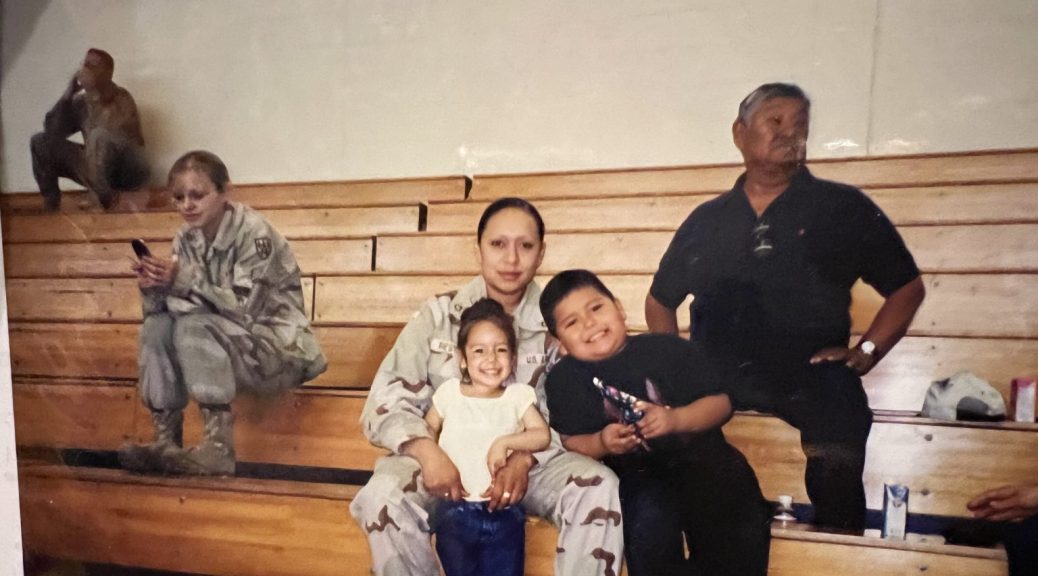
Courtesy ‘The NAU Review — What Memorial Day means to me’ by Brandon Piestewa

Courtesy photo.

Editor’s Note: The “Views from NAU” blog series highlights the thoughts of different people affiliated with NAU, including faculty members sharing opinions or research in their areas of expertise. The views expressed reflect the authors’ own personal perspectives.

By Brandon Piestewa

Academic program coordinator, Veteran and Military Services

Piestewa is a coordinator in NAU’s Veteran and Military Services (VMS) and is a member of the Hopi and Navajo tribes as well as having Mexican ancestry. His mother, Lori Piestewa, was in the Army and was one of the first to go into Iraq in 2003.


Shí éí Brandon Piestewa yinishyé

Nakaii nishłį́
Naaneesht’ézhí Tachii’nii bashishchiin Shash dashicheii
Tábąąhí dashinalí

Hi, my name is Brandon Piestewa. My mother is from the Mexican clan. My father is born of the charcoal streak red running into the water people. My maternal father is Bear clan. And my paternal father is edge water people.

While some may perceive this day as a holiday, offering a break from work or school, I as a military dependent perceive Memorial Day not just as a holiday but also as a deeply personal day of remembrance and respect for those who have made the ultimate sacrifice. From my personal perspective, I experience it as missing parental involvement during crucial life milestones, such as sporting events or graduation ceremonies. The Iraq War tragically claimed the lives of approximately 4,500 U.S. troops, leaving over 3,000 children bereft of a parent. Consequently, many of us have experienced a loss in some shape or form. 

I became deeply entrenched in the military-connected community at a young age due to the sacrifice my mother made while serving. The 507th Maintenance Company, a unit of the United States Army, was among the initial forces deployed in Operation Iraqi Freedom in 2003. They encountered an ambush during the Battle of Nasiriyah, resulting in casualties and prisoners of war, including 11 soldiers killed and seven taken captive. Notably, one of the prisoners was my mother.  

Learn more about Lori Piestewa.

This profound event altered the course of my life, leading me to embrace a lifestyle intertwined with military experiences. It caused me to grow up faster than most kids and learn that life is not fair when it comes to the freedom we have in our country. Our family was recognized for her sacrifice, but despite the nationwide recognition, navigating the aftermath proved challenging. Attending numerous recognition events served as a constant reminder of the tragic loss I endured, and that didn’t seem fair.  

With maturity, I realized the global impact my mother’s sacrifice made on the country and on Native American communities, to which my mother belonged. As a result, I understood my role, which involved preserving my mother’s legacy. My purpose became clear: to honor her memory by raising awareness of her sacrifice and those of other service members who have been in the same situation. Through sharing my experiences of coping with loss, depression, trauma and longing, I aim to offer support and guidance to those navigating similar journeys and advocating for military-dependent children facing similar challenges. 

As we approach the upcoming long weekend, it’s essential to pause our busy schedules and dedicate a moment to solemn reflection. Let us honor the sacrifices made by our service members by sharing with friends or loved ones stories of those who bravely served. By recounting their valorous deeds, we ensure their memory endures, forever etched in our collective consciousness. Let us pledge to preserve their legacy, acknowledging the heroic contributions that have safeguarded our cherished freedoms.  

Bilingual report — NAU conducting study of Latinx community and COVID-19

By NAU Center for Health Equity Research

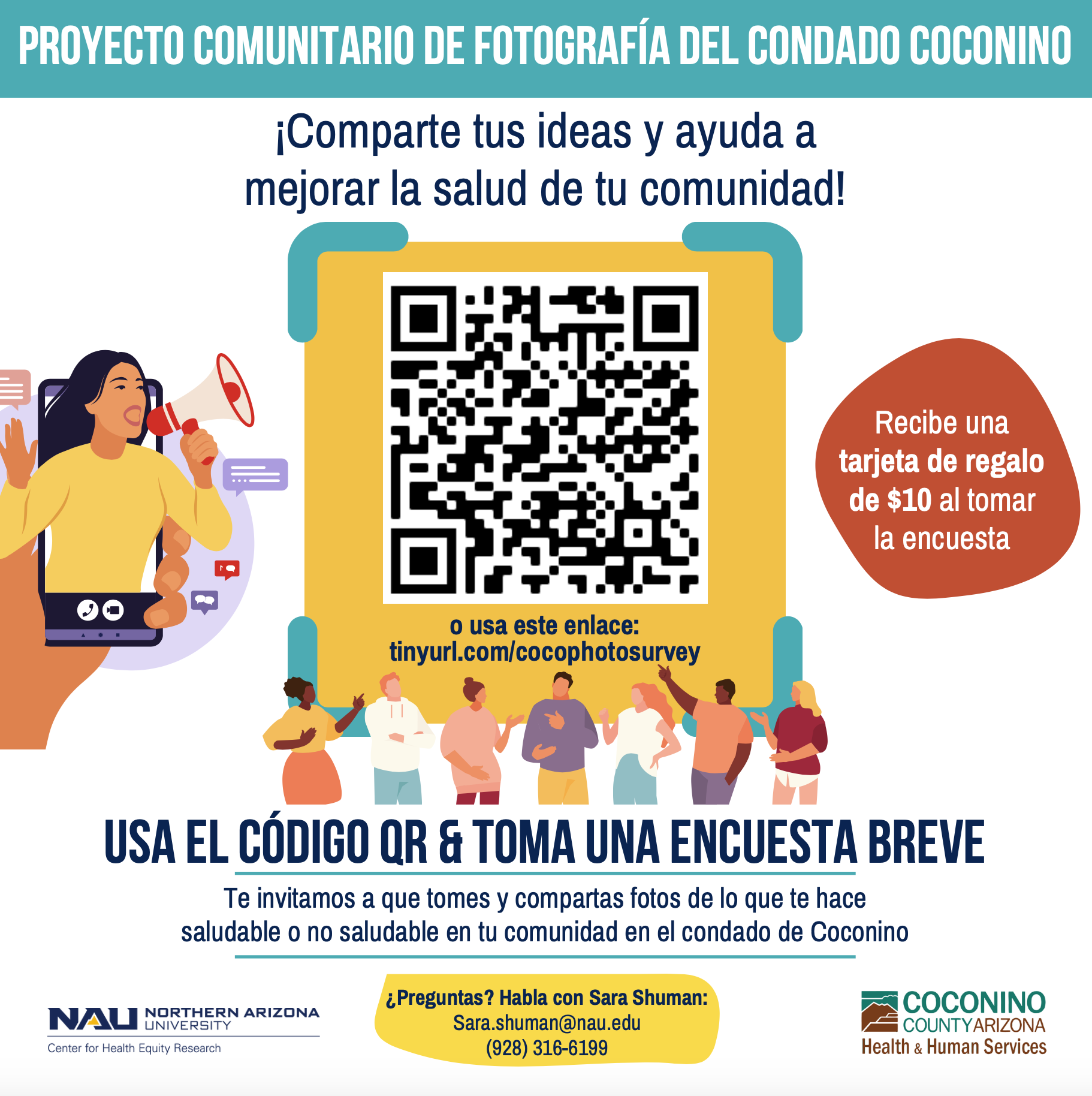
NAU Center for Health Equity Research and the Coconino County Health & Human Services are conducting a study on how the Latinx community is dealing with problems after having COVID-19.

This confidential conversation will give us valuable information to help us create healthier communities.

Participants will receive a $10 gift card.

You must: 

  • Be 18 years or older
  • Live in northern Arizona

Details:

Complete a short survey & join a 90-minute in-person or virtual group conversation 

  • Date TBD, 2022 at 6pm
  • Participation is voluntary
  • What you share will help create educational tools and resources for your community

Contact Sara Shuman at Sara.shuman@nau.edu for more information.

***

¡Hola! Solo quisieríamos compartir información sobre la investigación que se está realizando aquí en la Universidad del Norte de Arizona relacionada con la comunidad hispana y latinx. El Centro de Investigación de Equidad en Salud de NAU y los Servicios Humanos y de Salud del Condado de Coconino están realizando un estudio sobre cómo la comunidad latinx está lidiando con las problemas después de contraer el COVID-19. La información obtenida será confidencial y se utilizará para ayudar a crear comunidades más saludables. La participación en el estudio es completamente voluntaria, pero recibirá Vd. una tarjeta de regalo de $10. Para ser elegible para el estudio, debe tener 18 años o más y vivir en el norte de Arizona. El estudio consiste de un cuestionario corto y participación en una conversación grupal presencial o virtual de 90 minutos. Si tiene alguna pregunta o desea obtener más información, no dude en comunicarse con Sara.shuman@nau.edu.

— Traducción por Andres Huerta

Bilingual report — Participants needed for NAU study: The influence of Native American genetic ancestry in Hispanics in northern Arizona: an investigation of insulin in endothelial function and blood pressure regulation

FLAGSTAFF — The Cardiovascular Regulation Laboratory in the Department of Biological Sciences at NAU is seeking to recruit individuals of Hispanic background for a National Institutes of Health funded research study.

What are we studying?

We are specifically interested in how an individual’s genetic make-up influences their ability to process sugar.  We will relate your genetic make-up and ability to process sugar to how your body responds to tests that alter your blood pressure.  Some of these tests include getting images of a vessel in your upper arm, a test where you place your hand in very cold water, a mental math test (subtraction), and an exercise test.

There are also some blood draws in this study and a day where you will wear a blood pressure monitor for a full 24-hr period.  We will provide some of these results to you.

The total time commitment is about 7.5 hrs with one screening visit, three study visits to the lab plus one quick visit just to return the blood pressure monitor.

In order to participate, you must be: generally healthy, between 18-45 years old, non-smoking or tobacco/nicotine product using, not have high blood pressure, and not be overweight.

Why is this research important?

Health disparities exist and our work will help answer whether part of this is related to a person’s genetic make-up.  Our Laboratory’s long-term goal is to help find answers related to health disparities as they relate to cardiovascular regulation and determine what intervention strategies might be appropriate.

Contact information:

You will be compensated $150 for participating in the study.  If you are interested, please call our Laboratory at (928) 523-8629 or email CVLab@nau.edu to see if you qualify. Dr. Sara Jarvis is the Principal Investigator of the study.  If you have any questions about this research, you may reach her directly at Sara.Jarvis@nau.edu

***

¡Hola! El otra investigacion se está realizando aquí en la Universidad del Norte de Arizona con el Laboratorio de Regulación Cardiovascular.

¿Qué estamos investigando?

Estamos específicamente interesados en conocer cómo la composición genética de un individuo influye en su capacidad para procesar el azúcar. Relacionaremos su composición genética y su capacidad para procesar el azúcar con la forma en que su cuerpo responde a las pruebas que alteran su presión arterial. Algunas de estas pruebas incluyen obtener una muestra de una vena en la parte superior del brazo, una prueba en la que coloca la mano en agua muy fría, una prueba de cálculo mental (restar) y una prueba de ejercicio.

También hay algunas extracciones de sangre en esta investigacíon y un día en que se usará un monitor de presión arterial durante un período completo de 24 horas. Le proporcionaremos algunos de estos resultados. El compromiso de tiempo total es de aproximadamente 7.5 horas con una visita de detección, tres visitas de estudio al laboratorio, más una visita rápida solo para devolver el monitor de presión arterial. Para participar, debe ser: en general saludable, entre 18 y 45 años de edad, no fumar ni usar productos de tabaco/nicotina, no tener presión arterial alta y no tener sobrepeso.

¿Por qué es importante esta investigación? Existen disparidades de salud y nuestro trabajo ayudará a responder si parte de esto está relacionado con la composición genética de una persona. El objetivo a largo plazo de nuestro laboratorio es ayudar a encontrar respuestas relacionadas con las disparidades de salud en relación con la regulación cardiovascular y determinar qué estrategias de intervención podrían ser apropiadas. Hay un pago de $150 por participar en el estudio. Si usted o alguien que conoce está interesado, ¡realmente nos vendría bien la ayuda! Puede enviarnos un correo electrónico a CVLAB@NAU.EDU o escanear el código QR para ser dirigido a nuestro formulario de interés de estudio.

— Traducción por Andres Huerta

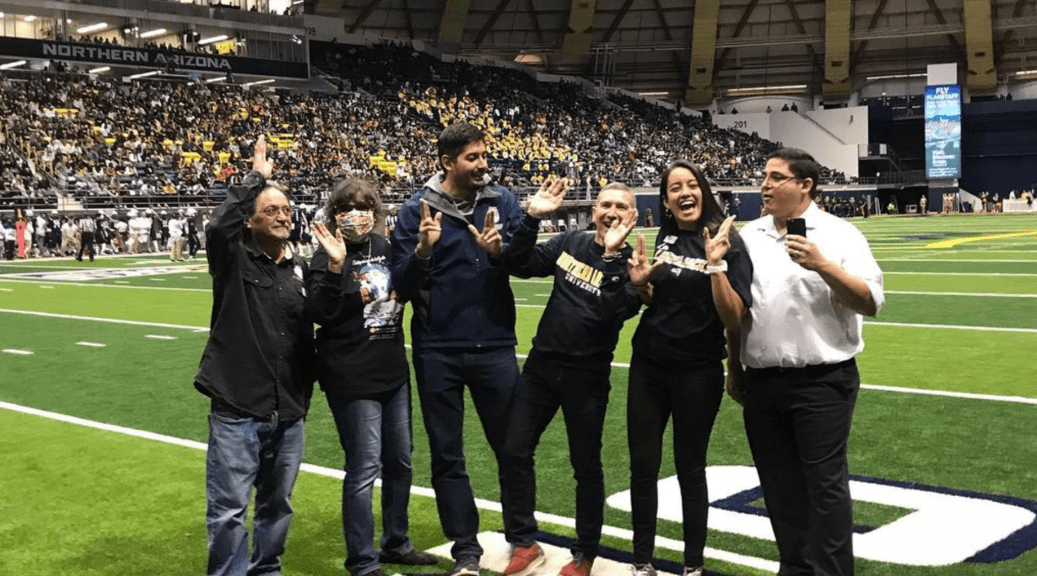
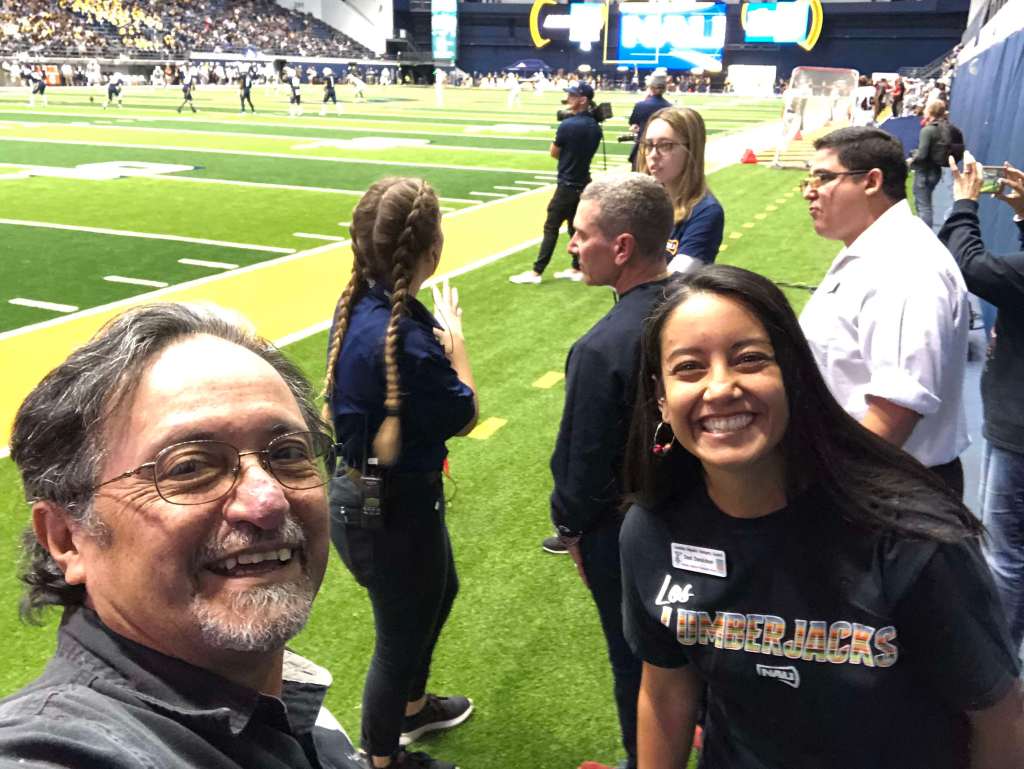
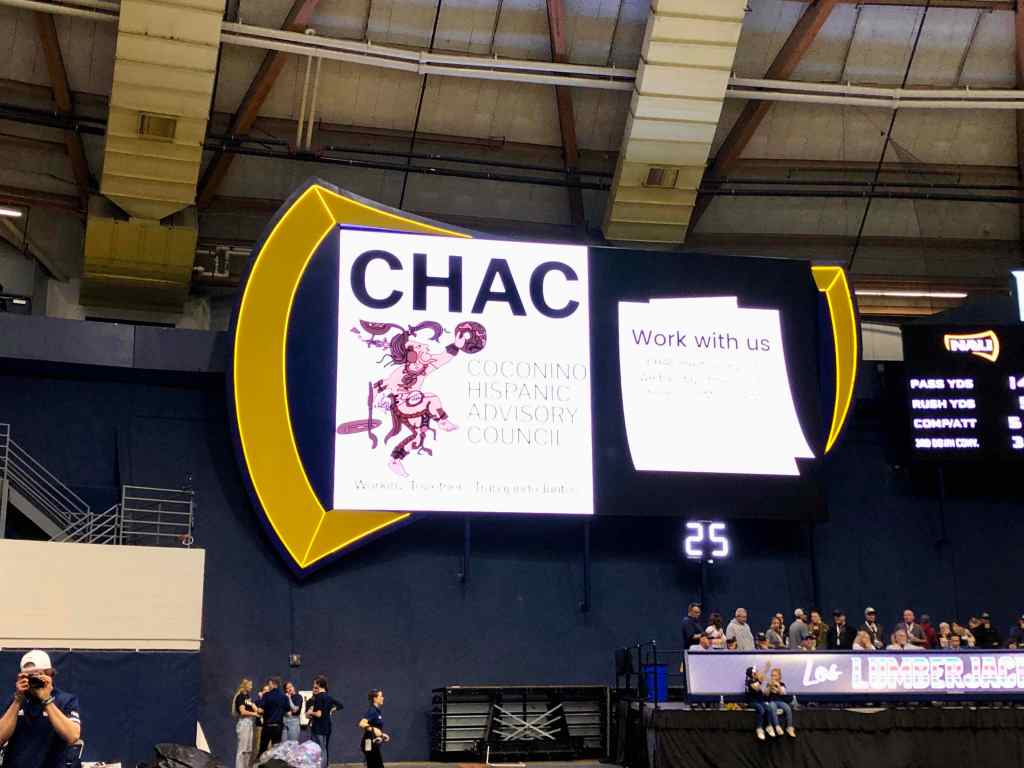
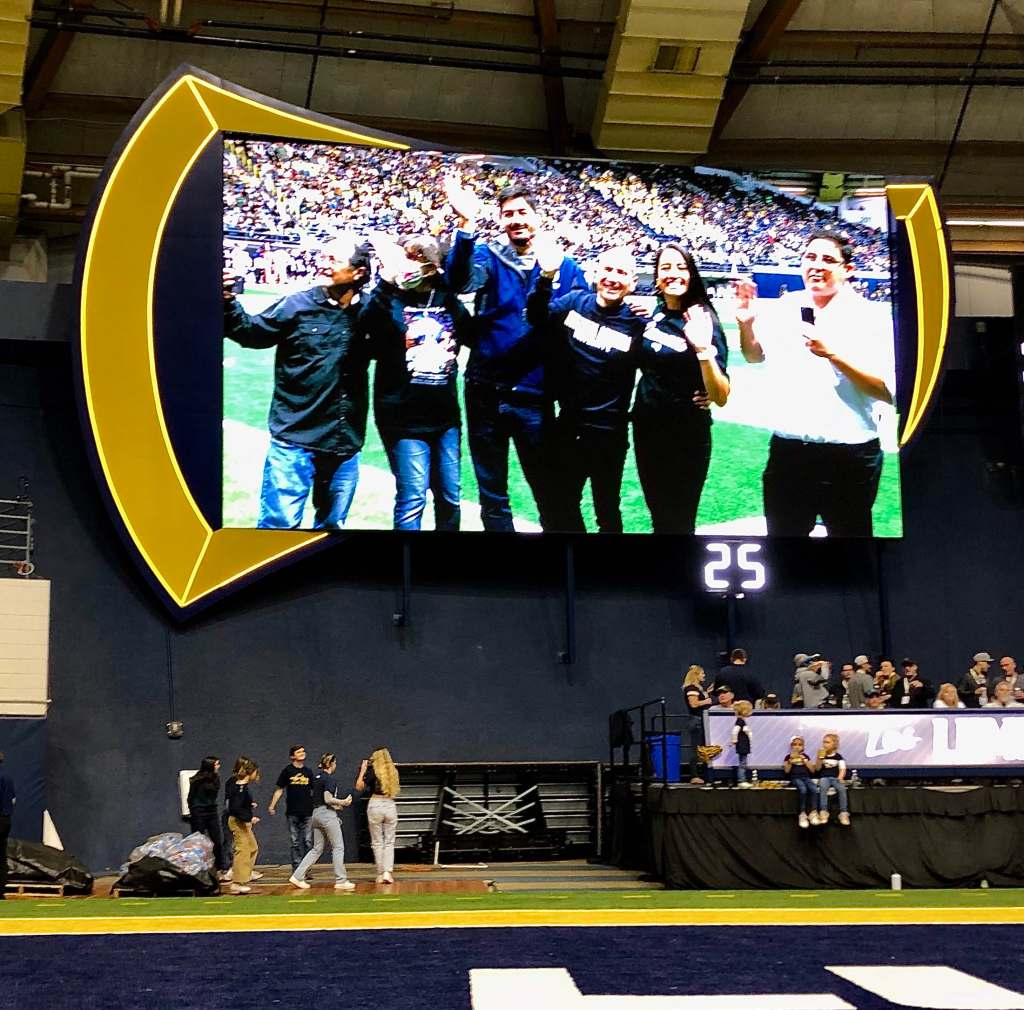
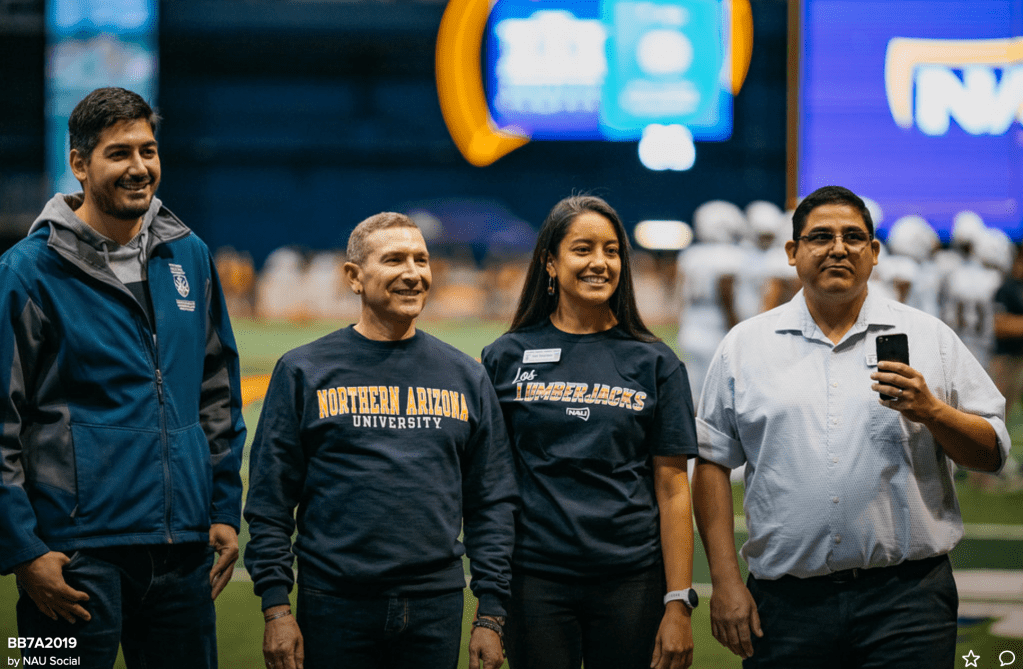
CHAC honored at 2021 NAU Homecoming Game

Hispanic Heritage Game: 20 years of CHAC Celebration

Go Los Jacks!

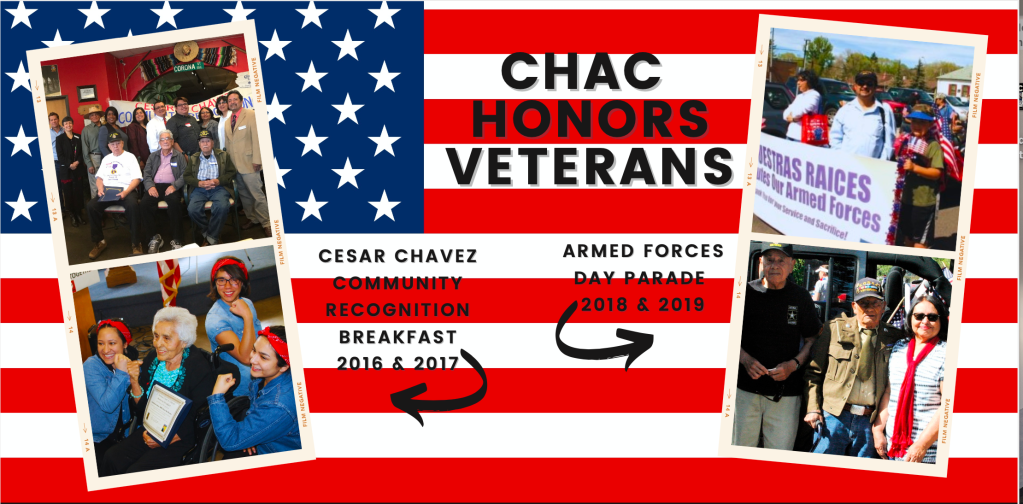
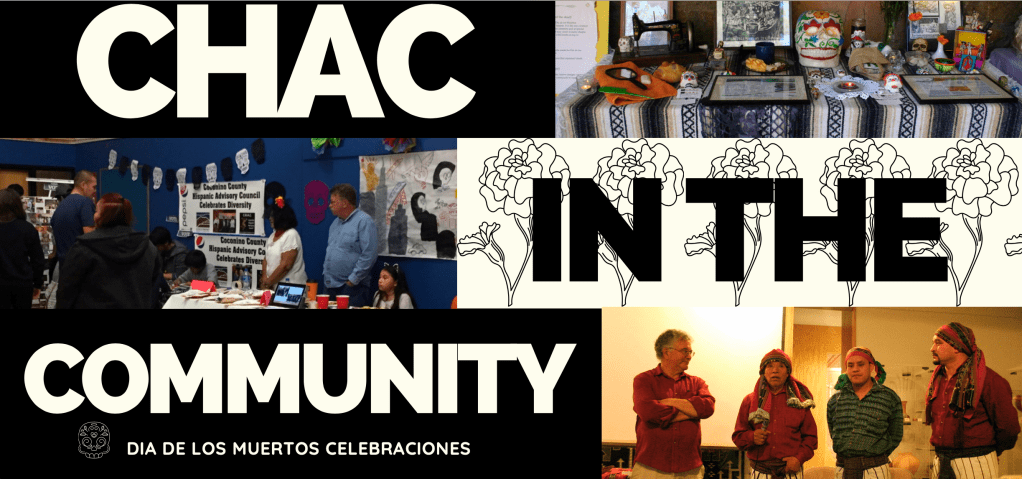
Established in 2001 by the Board of Supervisors, the Coconino County Hispanic Advisory Council (C.H.A.C.) serves as an official liaison and communications link between the Hispanic/Latinx community and Coconino County leadership. This year, CHAC is being recognized for 20 years of community action and volunteerism. As leaders in the Hispanic/Latinx community, CHAC upholds traditions such as Cesar Chavez Celebrations and Hispanic Heritage Month events, while addressing current community trends through mentorship, conversation, and action. As we conclude the celebration of Hispanic Heritage Month, tonight we are joined by J Michael Cruz- CHAC Chair, Dani Donaldson- CHAC Vice Chair, Frank Moraga, Patty Garcia, and Esteban Villareal in recognition of this community organization. Thank you for your commitment to uplifting the voices of the Hispanic and Latinx communities in Coconino County for the past 20 years. CHAC members who could not be with us today are: Ruth Eaton, Miguel Vasquez, Jose Diaz Aquino, and Katie Mommaerts.

❗️Join us for CHAC meetings at 5:30 p.m. on the first Wednesday of each month❗️ 

#CHAC#hispanicheritagemonth